


- Home
- A-Z Catalogue
- Products
- Valves
- Cetop
- Manual Directional Valves
- Proportional Valves
- Poppet Valves
- High-Speed Linear Servo Valves
- All High-Speed Linear Servo Valves
- Cetop 10 (NG32) Two Stage Type High Speed Linear Servo Valves – LSVHG-10
- Cetop 10 (NG32) Two Stage Type High Speed Linear Servo Valves – LSVHG-10 (With Fail-Safe)
- Cetop 8 (NG25) Two Stage Type High Speed Linear Servo Valves – LSVHG-06
- Cetop 8 (NG25) Two Stage Type High Speed Linear Servo Valves – LSVHG-06 (With Fail-Safe)
- Cetop 7 (NG16) Two Stage Type High Speed Linear Servo Valves – LSVHG-04
- Cetop 7 (NG16) Two Stage Type High Speed Linear Servo Valves – LSVHG-04 (With Fail-Safe)
- Cetop 5 (NG10) Direct Type High Speed Linear Servo Valves – LSVG-03
- Cetop 5 (NG10) OBE Type Direct Operated Linear Servo Valves – LSVG-03-EH
- Cetop 3 (NG6) OBE Type Direct Operated Linear Servo Valves – LSVG-01-EH
- Pumps
- Pressure control
- Flow Control Valves
- Pressure Control Valves
- All Pressure Control Valves
- Brake Valves
- Direct Relief Valve
- Low Noise Solenoid Controlled Relief Valves
- Low Noise Pilot Operated Relief Valves
- Pilot Operated Relief Valves
- Pressure reducing and relieving valves
- Pressure reducing and check valves
- Pressure control valves
- Remote Control Relief Valves
- Solenoid Controlled Relief Valves – BSG
- Solenoid Controlled Relief Valves – BST
- Unloading relief valves
- Check valves
- Environmental
- Valves
- Hydraulic Systems
- Power pack
- About Us
- Contact
- Blog

2026 Top Plumber Tools for Global Buyers
For global buyers, choosing the right Plumber Tools in 2026 means more than comparing prices. It requires practical judgment, verified performance, and awareness of different jobsite conditions. A compact pipe cutter may excel in a European apartment renovation, while a heavy-duty press tool may better suit commercial projects in North America or the Middle East.
Richard Trethewey, a respected plumbing and heating expert, has often emphasized a simple principle: “The right tool makes the work easier, safer, and more reliable.” That idea remains important today. Professional buyers should examine jaw strength, grip comfort, corrosion resistance, battery life, replacement parts, and service support. A wrench that feels solid in a showroom may become tiring after eight hours of overhead work. Small details matter.
This guide reviews leading Plumber Tools for contractors, distributors, and serious maintenance teams. It considers real working conditions, not just attractive product images. Tools must handle copper, PVC, stainless steel, and difficult access points without creating unnecessary damage. Certification and local compliance also deserve attention, especially for buyers serving multiple markets.
No buying guide is perfect. Some tool choices depend on personal technique, budget, and regional supply chains. Even experienced plumbers can overlook long-term repair costs. That is why this overview combines professional experience, technical specifications, and practical purchasing concerns. The goal is not to promote the most expensive equipment. It is to identify dependable tools that earn their place in a working toolbox.
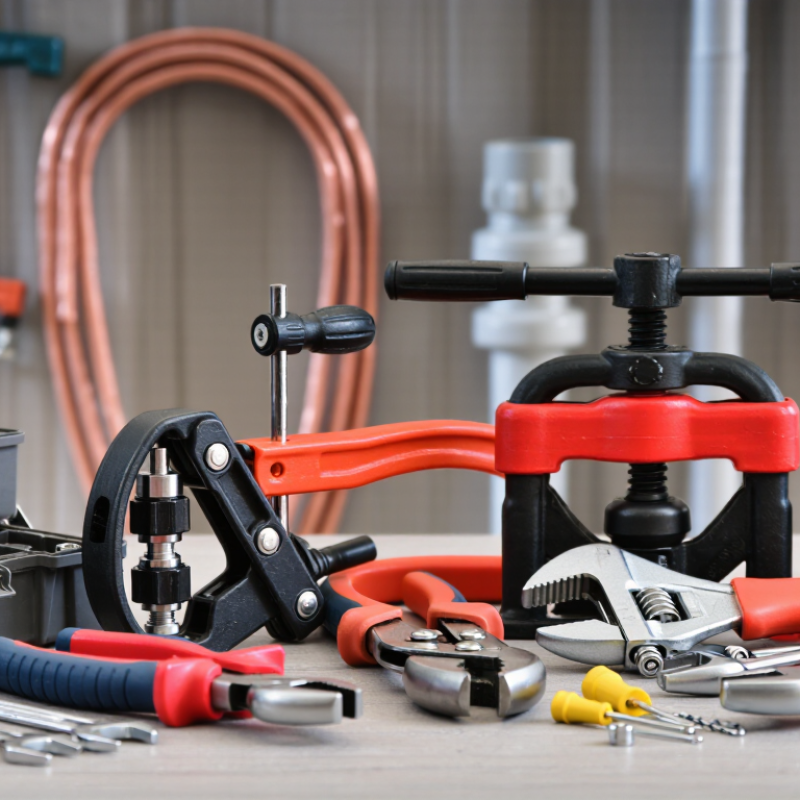
Table of Contents [Hide]
Plumber Tool Categories and Their Core Functions
Professional plumbing work depends on choosing tools by function, not appearance. Adjustable wrenches handle compression fittings, supply valves, and hexagonal nuts. Pipe wrenches provide stronger gripping power on threaded metal pipes. They can mark polished surfaces, so a protective cloth helps. Pliers support smaller tasks, such as holding fittings or removing worn washers.
Drain tools address blockages through different methods. A plunger creates pressure for nearby clogs in sinks, tubs, and toilets. A hand auger reaches deeper through curved drain lines. Longer drain machines work farther into pipes, but they require controlled feeding and careful cleaning. Pipe cutters make straight cuts on copper, plastic, or multilayer pipe. Reamers remove sharp inner edges before connection. Threading tools create external threads on suitable metal pipes. Leaks often begin with poor preparation.
Inspection and measurement tools improve accuracy. A tape measure checks pipe runs, while a level confirms proper drainage angles. A pressure gauge can reveal unstable water pressure. Inspection cameras show hidden buildup, damaged joints, or unexpected bends. Personal protective equipment also matters. Gloves, eye protection, and non-slip footwear reduce common job-site risks.
In field work, tool categories can overlap. A basin wrench may solve a tight fixture problem better than a large wrench. I have found that carrying too many tools slows decisions. Carrying too few creates delays. Tool quality matters, but maintenance matters more. Clean jaws, sharp cutters, and dry storage improve reliability. My own selection process still needs revision after unusual pipe layouts and cramped working spaces.





