


- Home
- A-Z Catalogue
- Products
- Valves
- Cetop
- Manual Directional Valves
- Proportional Valves
- Poppet Valves
- High-Speed Linear Servo Valves
- All High-Speed Linear Servo Valves
- Cetop 10 (NG32) Two Stage Type High Speed Linear Servo Valves – LSVHG-10
- Cetop 10 (NG32) Two Stage Type High Speed Linear Servo Valves – LSVHG-10 (With Fail-Safe)
- Cetop 8 (NG25) Two Stage Type High Speed Linear Servo Valves – LSVHG-06
- Cetop 8 (NG25) Two Stage Type High Speed Linear Servo Valves – LSVHG-06 (With Fail-Safe)
- Cetop 7 (NG16) Two Stage Type High Speed Linear Servo Valves – LSVHG-04
- Cetop 7 (NG16) Two Stage Type High Speed Linear Servo Valves – LSVHG-04 (With Fail-Safe)
- Cetop 5 (NG10) Direct Type High Speed Linear Servo Valves – LSVG-03
- Cetop 5 (NG10) OBE Type Direct Operated Linear Servo Valves – LSVG-03-EH
- Cetop 3 (NG6) OBE Type Direct Operated Linear Servo Valves – LSVG-01-EH
- Pumps
- Pressure control
- Flow Control Valves
- Pressure Control Valves
- All Pressure Control Valves
- Brake Valves
- Direct Relief Valve
- Low Noise Solenoid Controlled Relief Valves
- Low Noise Pilot Operated Relief Valves
- Pilot Operated Relief Valves
- Pressure reducing and relieving valves
- Pressure reducing and check valves
- Pressure control valves
- Remote Control Relief Valves
- Solenoid Controlled Relief Valves – BSG
- Solenoid Controlled Relief Valves – BST
- Unloading relief valves
- Check valves
- Environmental
- Valves
- Hydraulic Systems
- Power pack
- About Us
- Contact
- Blog

2026 Best ISTA Series Test Equipment for Package Testing
In 2026, choosing ISTA Series Test Equipment for Packages Test is not just a matter of buying a shaker or drop tester. It means matching equipment to real distribution hazards: drops, vibration, compression, and changing handling conditions. The scale is substantial. Pitney Bowes’ 2023 Parcel Shipping Index reported 161 billion parcels shipped worldwide in 2022 and projected more than 256 billion by 2027. More parcels mean more chances for weak packaging to fail.
ISTA procedures provide repeatable ways to evaluate packaged products under simulated distribution conditions. Packaging engineer Dr. Jay Singh of California Polytechnic State University has extensive work in package testing and distribution simulation. A practical principle drawn from that work is simple: evaluate the complete package-product system, not the carton alone. This is a paraphrase, not a verbatim quotation. That distinction matters; precise sourcing builds trust.
A useful equipment shortlist should consider test standards, load capacity, fixture design, control accuracy, calibration records, and service support. Picture a sealed carton on a vibration table, its contents shifting with each cycle. Small details matter: a loose fixture or incorrect test profile can distort results. Not every facility needs the same setup. A small laboratory may value flexible, space-saving equipment, while a high-volume operation may need automated workflows and higher throughput. This guide compares leading options, explains where each test type fits, and highlights trade-offs buyers should verify before purchase. The best choice is the one that produces repeatable, relevant evidence—not simply the longest feature list.
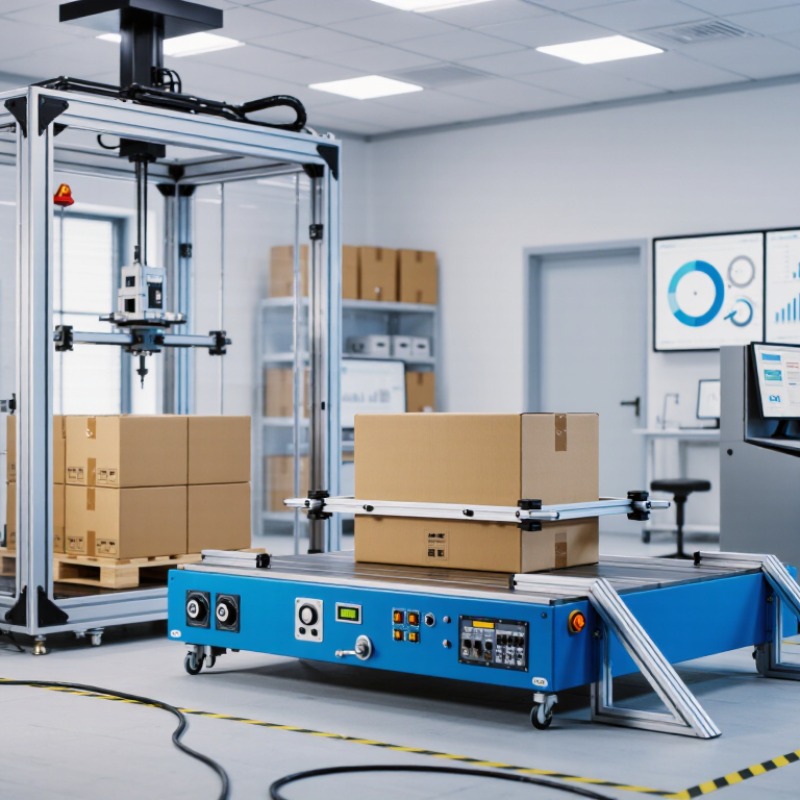
Table of Contents [Hide]
What ISTA Series Testing Equipment Is and Why Package Testing Uses It
ISTA series testing equipment recreates common stresses that packaged products may face during distribution. It can include drop testers, vibration tables, compression testers, and incline-impact equipment. Each device applies a controlled event, such as a corner drop or repeated vibration. The goal is to examine the package and its contents as one system.
A small crack in a carton can matter. So can a loose insert that lets a product shift several centimeters. Test equipment helps teams observe these details under repeatable conditions, rather than relying only on visual inspection after shipment. Results can guide choices about cushioning, carton strength, and closure methods.
Package testing uses these tools to compare designs and identify weak points before wider shipment. The selected procedure should reflect the product, packaging, and expected distribution route. For instance, a fragile item may need careful drop and vibration evaluation, while a heavy carton may require compression testing. Climate conditioning can also reveal how heat or humidity affects materials. A test pass is useful, but it is not a promise that every real shipment will arrive undamaged. Actual handling varies. That gap deserves attention when interpreting results.





