


- Home
- A-Z Catalogue
- Products
- Valves
- Cetop
- Manual Directional Valves
- Proportional Valves
- Poppet Valves
- High-Speed Linear Servo Valves
- All High-Speed Linear Servo Valves
- Cetop 10 (NG32) Two Stage Type High Speed Linear Servo Valves – LSVHG-10
- Cetop 10 (NG32) Two Stage Type High Speed Linear Servo Valves – LSVHG-10 (With Fail-Safe)
- Cetop 8 (NG25) Two Stage Type High Speed Linear Servo Valves – LSVHG-06
- Cetop 8 (NG25) Two Stage Type High Speed Linear Servo Valves – LSVHG-06 (With Fail-Safe)
- Cetop 7 (NG16) Two Stage Type High Speed Linear Servo Valves – LSVHG-04
- Cetop 7 (NG16) Two Stage Type High Speed Linear Servo Valves – LSVHG-04 (With Fail-Safe)
- Cetop 5 (NG10) Direct Type High Speed Linear Servo Valves – LSVG-03
- Cetop 5 (NG10) OBE Type Direct Operated Linear Servo Valves – LSVG-03-EH
- Cetop 3 (NG6) OBE Type Direct Operated Linear Servo Valves – LSVG-01-EH
- Pumps
- Pressure control
- Flow Control Valves
- Pressure Control Valves
- All Pressure Control Valves
- Brake Valves
- Direct Relief Valve
- Low Noise Solenoid Controlled Relief Valves
- Low Noise Pilot Operated Relief Valves
- Pilot Operated Relief Valves
- Pressure reducing and relieving valves
- Pressure reducing and check valves
- Pressure control valves
- Remote Control Relief Valves
- Solenoid Controlled Relief Valves – BSG
- Solenoid Controlled Relief Valves – BST
- Unloading relief valves
- Check valves
- Environmental
- Valves
- Hydraulic Systems
- Power pack
- About Us
- Contact
- Blog

2026 Best Eccentric Butterfly Valve Manufacturers?
Choosing the best eccentric butterfly valve manufacturers in 2026 requires more than comparing catalog prices. Buyers need evidence from real operating conditions, verified testing, and consistent after-sales support. An eccentric butterfly valve may look simple, yet its performance depends on sealing design, shaft alignment, disc geometry, materials, and actuator compatibility.
This guide examines manufacturers through practical and technical criteria. These include pressure ratings, temperature ranges, corrosion resistance, leakage testing, certification, production capacity, and documented quality systems. It also considers experience in water treatment, chemical processing, energy, and industrial pipeline projects. A reliable manufacturer should provide traceable materials, clear dimensional drawings, inspection records, and responsive engineering support. Small details matter. A clean valve seat can prevent costly downtime.
Field experience often reveals what brochures omit. Installation access, maintenance time, coating durability, and spare-part availability can influence total ownership costs. Customer references and independent inspection records may offer stronger evidence than promotional claims. Still, no ranking is perfect. Project requirements vary, and a highly respected supplier may not suit every application.
The manufacturers discussed here are assessed for technical capability, manufacturing consistency, innovation, and long-term reliability. However, readers should verify current certifications, factory capacity, and regional service before making a purchase. Product ranges can change during 2026. Specifications may also differ between standard and customized models. Careful comparison remains necessary, even when the supplier appears trustworthy.
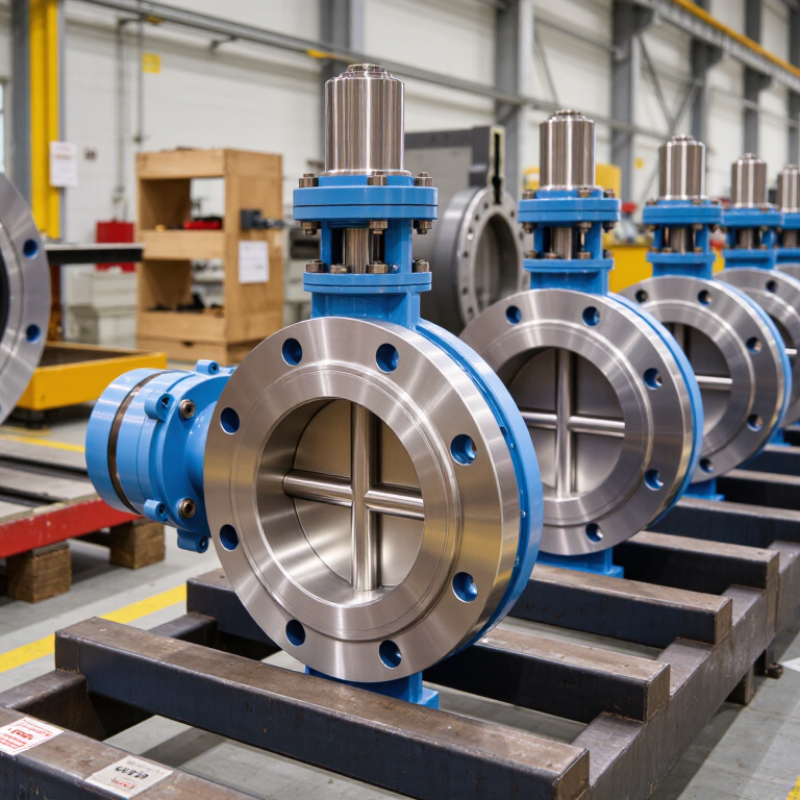
Table of Contents [Hide]
What Is an Eccentric Butterfly Valve and How Does It Work?
2026 Best Eccentric Butterfly Valve Manufacturers?
What Is an Eccentric Butterfly Valve and How Does It Work?
An eccentric butterfly valve has a disc and shaft positioned away from the pipe’s centerline. This offset changes how the disc meets the seat. During opening, the disc quickly moves away from the sealing surface. Less rubbing occurs. This design can reduce wear, operating torque, and seat damage.
Double-offset valves are common in water, wastewater, HVAC, and industrial pipelines. Triple-offset versions add a conical sealing geometry. They usually suit hotter, higher-pressure services. The correct choice depends on pressure class, temperature, media, and cycling frequency. A valve may look excellent on paper. Field conditions can disagree.
The U.S. Environmental Protection Agency’s 2023 Drinking Water Infrastructure Needs Survey estimates $625 billion in investment over 20 years. The figure shows why dependable flow-control equipment matters. The 2024 UN World Water Development Report also notes that 2.2 billion people lacked safely managed drinking water in 2022. These figures support careful valve selection, not careless oversizing.
A practical inspection checks shaft alignment, seat materials, actuator sizing, and pressure direction. ISO 5211 mounting compatibility also matters. Mud, sand, and poor installation can shorten service life. That part is often underestimated. Manufacturers should provide tested leakage data, material certificates, torque curves, and traceable quality records. Eccentric operation reduces contact, but it does not excuse weak engineering.





